Tony Horwitz discusses the journeys he took retracing Cook's voyages across the Pacific, how Cook is regarded by native peoples and what his voyages mean to us today.
Blue Latitudes focuses on the voyages
of the eighteenth-century navigator James Cook. What drew you to Captain
Cook?
Initially, I was drawn more to Cook's voyages than to Cook himself. The
man went everywhere: he touched every continent except Antarctica, and he only
missed that by a hundred or so miles. In the past, writers have focused on
Cook's considerable maritime achievements as a navigator and mapmaker. But to
me, the most compelling part of his story is what happened on land: the drama of
'first contact' between Europeans and native peoples. Island after island,
Cook and his men stepped off their ship with no idea whether they'd be greeted
with embraces or arrows. They knew little or nothing of the cultures they
were about to encounter, and islanders knew even less of them. Yet somehow they
had to find a way to communicate, trade, and get along -- and remarkably, for
the most part they did.
This is an experience we simply can't have
today, no matter how far we travel. The only remotely similar experience
would be if a spaceship landed in our backyard and aliens stepped out to greet
us -- except that Hollywood has prepared us even for that. Cook experienced
'first contact' dozens of times, and left a vivid record of what it was like. His
journals are very reminiscent of Lewis and Clark's. To me, these are the
best adventure stories in history.
But as I began to research the captain's
voyages, I became just as entranced by Cook the man. He was born in a mud hut in
rural Yorkshire, the son of an illiterate day laborer: the very bottom of
Britain's class-bound, 18th-century society. Yet he broke free from
this cramped world and went on to explore more of the earth's surface than any
person in history. He's a British Abe Lincoln: a once-in-a-generation
figure who comes out of nowhere to transform his world and ours. You have
to wonder what drives a man like that, and much of my book is an attempt to
understand Cook's character.
What kind of research did you do?
I spent about 18 months retracing Cook's voyages across the Pacific. I
traveled to Tahiti, New Zealand, Australia, Tonga, Hawaii, the Aleutian Islands
and other places in between. I also toured Cook's childhood haunts in
Yorkshire, to understand the world he came from. In each locale, I compared what
Cook saw in the 1700s with what I encountered in the Twenty-first century and
explored how Cook is regarded by native peoples and what his voyages mean to us
today.
In between trips, I delved into the archives in
Sydney, London, Honolulu, and other cities, to research the historical story of
Cook and his voyages. For the most part, I turned to the journals and art
of Cook and his men, and supplemented this with the work of historians,
anthropologists, and indigenous writers. I discovered that most of those
who have written about Cook are old-school British or colonial scholars of a
nautical bent. They tend to avoid or gloss over the racy and controversial
aspects of the story, such as sex, cannibalism, and Cook's eventual breakdown. As
a landsman, and as an American who doesn't bring any particular ideological
baggage to Cook's story, I feel I was able to explore areas that have been
neglected, and bring some balance to my portrait of the navigator. Blue
Latitudes isn't a work of academic history -- I wanted to make Cook's story
accessible to everyone -- but I hope I've contributed new insights.
You worked for many years as a foreign
correspondent covering conflicts in the Persian Gulf, Sudan, Lebanon, Bosnia,
and Northern Ireland, and you won the Pulitzer Prize for national reporting for
your series on low-wage work in America. Your previous books One for the
Road, Baghdad Without a Map, Confederates in the Attic, and
now Blue Latitudes combine humor, adventure travel, and history. Why
did you make this transition?
I love journalism, but at times it feels
confining: 'He said, she said,' 'On the other hand,' 'Unavailable for comment.' Books
give me a chance to break out of that box: to dwell on a topic for more than a
few days or weeks, write and rewrite my sentences until I'm really happy with
them, express a strong opinion. It's liberating. Also, the books I've
written tend to be more free-form than journalism allows, cutting across genres
and disciplines. But I still think like a journalist. I walk around with a
spiral reporter's notebook in my pocket, drink too much coffee, and keep asking
myself, 'What's the headline for this story?' The difference is that my
deadline is a matter of years rather than hours.
Your books tackle very different topics:
hitchhiking across the Australian outback, the Middle East, the Civil War in the
contemporary South, and the journeys and legacies of Captain Cook. Is there
an underlying thread to your books?
I like to write about places that are strange to me -- places that are a bit
extreme and uncomfortable. I wouldn't know what to say about a resort:
it's too comfortable, too nice. When I'm in a roughneck pub in outback
Australia, or a battlefield in Iraq, or Savage Island in the Pacific, my
antennae are up, I'm on edge and I'm sure to meet unusual characters. If
there's another thread, it's history. I'm fascinated by the ways the past
leaches into the present, and how we're still influenced and haunted by events
that occurred decades or centuries ago.
In
the United States we're taught very little about Captain Cook. Is his memory
still strong in the places he 'discovered?'
Memory of Cook varies a
great deal from country to country. In Tahiti, where the French seized control
from the British seventy years after Cook's voyages, he's conveniently
forgotten. In New Zealand and Australia, he's seen as a 'founding father' by
some whites, while being reviled as an imperialist by many Maori and Aborigines.
In Tonga, which has modeled itself on monarchial England, he's remembered
fondly: a turtle he gave to a Tongan king roamed the palace grounds until a few
decades ago. In Hawaii, he's widely despised, because American missionaries
spread disparaging tales about his behavior on the islands. One Hawaiian
activist has termed Cook a "syphilitic, tubercular racist" and
declared it a point of pride that the captain didn't leave Hawaiian shores
alive. So I had plenty of controversy to work with in writing this book.
During your travels you take on crew. Can
you explain?
Generally, I like to travel on my own. But
soon after I embarked on my journey, an Australian mate, Roger Williamson,
announced that he wanted to come along. Roger, like Cook, is Yorkshire born
and bred, and a talented sailor. He's also a hard-drinking, wise-cracking
adventurer. So I said, "what the hell, come with me to Tahiti,"
which was my first stop. Then Roger stuck around, so he's in most of the book. I
didn't plan it that way, but I'm glad he came along. Roger provides comic
relief, and also a running commentary on nautical matters, the subtleties of the
British class system, and other subjects on which I'm not expert.
In Confederates in the Attic you try
your hand at being a Civil War reenactor. In Blue Latitudes you sign
on as a working crewman aboard a replica of Cook's ship, attend a Maori tribal
meeting in New Zealand, participate in a beer-sodden reenactment of Cook's
landing in Cooktown, Australia, and find yourself braving Bora Bora reef in the
darkness of night. What inspires you to immerse yourself in your subject
this way?
Journalists spend a lot of time standing outside events, observing and
solemnly recording the opinions of participants. Journalists are very
detached. But I like to get inside the heads of those I'm writing about by
sharing their experiences. The same goes for history: while I wouldn't
pretend that I can know what it was to be a Civil War soldier or a sailor aboard
one of Cook's ships, I can try to get a better understanding of it. As a
Civil War reenactor, I sensed what it was like to march for ten hours in summer
heat, in ill-fitting shoes, toting a musket and a haversack. The same was
true for my adventures in Cook's wake. Sailing at night through the
treacherous reef in Bora Bora gave me some insight into the astonishing courage
and skill of Cook and his men. I sailed aboard a boat equipped with a
global-positioning system and other high-tech gear, and still almost came to
grief. Cook didn't have so much as a map or a life raft.
Tell us about your experience on the replica
of the Endeavour.
The Endeavour was the first vessel Cook
sailed around the world: a lumbering, hundred-foot coal ship with a very shallow
keel that made it exceptionally rocky in heavy seas. As a volunteer sailor
aboard a museum-quality replica of the Endeavour, I lived and worked like
an eighteenth-century seaman: sleeping in a narrow hammock in the ship's hold
alongside forty others, climbing the 127-foot main mast to furl sails in rolling
seas, manning the helm in a hard blow. I thought Civil War reenacting was
the most wretched thing I'd ever do for the sake of a good story. But I'd
rather eat hard tack and salt pork and spoon with smelly Confederates in
freezing weather than brave another stint on the topmost yard of Cook's ship,
trying to tie knots around flapping sails with the sea frothing far below. It
was like putting in a twelve-hour work day aboard a roller coaster at sea, with
the only 'rest' being a few minutes of fitful sleep in a stifling, rocking
chamber that felt like a meat locker.
Do people really do this for fun?
Incredibly, yes. I think people feel very
coddled today so they seek out challenge and adventure. Some people climb
mountains or hang-glide. Others sign on for a stint aboard Cook's ship (in
many cases, because they've read too many Patrick O'Brian novels.) While it was
terrifying and wretched, it was also one of the most memorable things I've ever
done. The people I worked and slept beside are still friends. And I'll
never complain about jet travel again. We're wimps compared to Cook and his
men, who did this for three years at a time in conditions that made my brief
time aboard the Endeavour seem like child's pirate play.
In your book, you juxtapose the exotic
scenes and pristine lands the captain encountered in his travels to the loss of
native culture and environment that has taken place since. Did you find
positive elements of Cook's legacy?
Yes. The sad truth is that Cook's
discoveries paved the way for whalers, traders, colonialists, missionaries and
others who dispossessed native peoples, destroyed their cultures and belief
systems, and despoiled the environment. We have to recognize this, and do
what we can to repair the damage done. But I don't think we should dismiss
and vilify Cook in the process. He didn't set out to ravage the Pacific:
his mission was to explore and understand, not exploit. And much of what he
wrote was strikingly sensitive. Most explorers before him were brutal men:
gold-mad conquistadors and buccaneers who regarded natives as heathen savages
and thought nothing of slaughtering them. Cook was open and tolerant, and
willing to learn from unfamiliar cultures -- he admired their non-materialism
and their respect for the environment. I think this is instructive at a
moment in time when we tend to regard foreign societies with fear, and in many
cases, hostility.
Also, the writing and artwork of Cook and his
crew give us the best snapshot we have of what life was like in the Pacific at
the moment of European contact. Many native peoples are now using this as a
resource to reclaim what was lost. Hawaiians are turning to Cook to understand
the design of their canoes, Maori in New Zealand use Cook's journals as evidence
in their land claims, Australian Aborigines study their language and customs in
the records of the Endeavour, Tahitians copy the tattoos described by
Eighteenth century explorers. So there's still a great deal to learn from
what Cook and his men saw and recorded over two centuries ago.
Unless otherwise stated, this interview was conducted at the time the book was first published, and is reproduced with permission of the publisher. This interview may not be reproduced or reprinted without permission in writing from the copyright holder.



Mark Adams is the author of the New York Times bestsellers Meet Me in Atlantis and Turn Right at Machu Picchu. A writer for many national magazines, including GQ, Men's Journal, and New York, he lives near New York City with ... (more)
If you enjoyed:
Blue Latitudes
Try:
Tip of the Iceberg
by Mark Adams

John Balzar is Senior Vice President, Communications, of the Humane Society of the United States. He joined the executive staff in 2007 after a 33-year career as a journalist, writer, and adventurer.
His opinion columns ...
(more)
If you enjoyed:
Blue Latitudes
Try:
Yukon Alone
by John Balzar
We recommend 6 similar authors




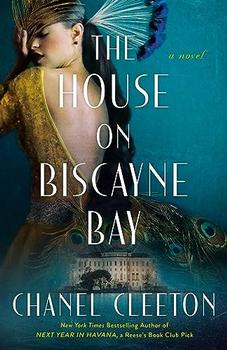
The House on Biscayne Bay
by Chanel Cleeton
As death stalks a gothic mansion in Miami, the lives of two women intertwine as the past and present collide.
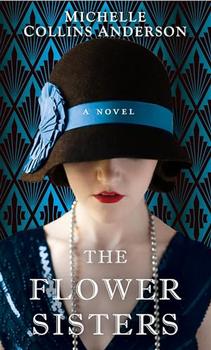
The Flower Sisters
by Michelle Collins Anderson
From the new Fannie Flagg of the Ozarks, a richly-woven story of family, forgiveness, and reinvention.

The Funeral Cryer by Wenyan Lu
Debut novelist Wenyan Lu brings us this witty yet profound story about one woman's midlife reawakening in contemporary rural China.
Your guide toexceptional books
BookBrowse seeks out and recommends the best in contemporary fiction and nonfiction—books that not only engage and entertain but also deepen our understanding of ourselves and the world around us.